

On a Path of Self-Knowledge
A Morning Ritual Invitation

The Myth of the Perfect Morning
Every season brings a new “biohack” promising to fix our mornings: ice baths for resilience, fasting for longevity, hyperventilating breathwork for focus, fasted cardio for fat loss, red light and dopamine stacking for “optimization.”
But most of these routines were built on — and tested almost exclusively for — male physiology. Their hormones run (mostly) in a neat 24-hour loop; ours unfold across roughly twenty-nine days. What balances their cortisol can overload the stress response, suppress ovulation, or drain energy in those of us with cyclical bodies.
Cold plunges and cryotherapy? They can boost alertness short-term but also strain the thyroid and menstrual rhythm if overused.1
Intermittent fasting? Shown to disrupt estrogen and progesterone in people with ovaries when practiced rigidly.2
Activating breathwork and fasted HIIT? Great for quick dopamine, less so for bodies that thrive on oxytocin, nourishment, and safety.3
If those “perfect morning” routines have ever left you anxious, hungry, or hollow, you’re not broken. You’re just not a small man.
So instead of hacking yourself, what if you met yourself?
As my Alchemy teacher says: When you wake, invite your soul back into your body. She’s been frolicking through the Ether all night; give her time to settle.
That’s where the real morning ritual begins.
A Morning Ritual Menu
Take what calls you. Leave what doesn’t. Allow yourself to change your mind often. The goal is not to create the “perfect morning” but to return to yourself.
1. Soul-Landing & Temperature
Inspired by my Alchemy teacher (@twitchywitch) and Lisa Hendrickson-Jack (The Fifth Vital Sign).
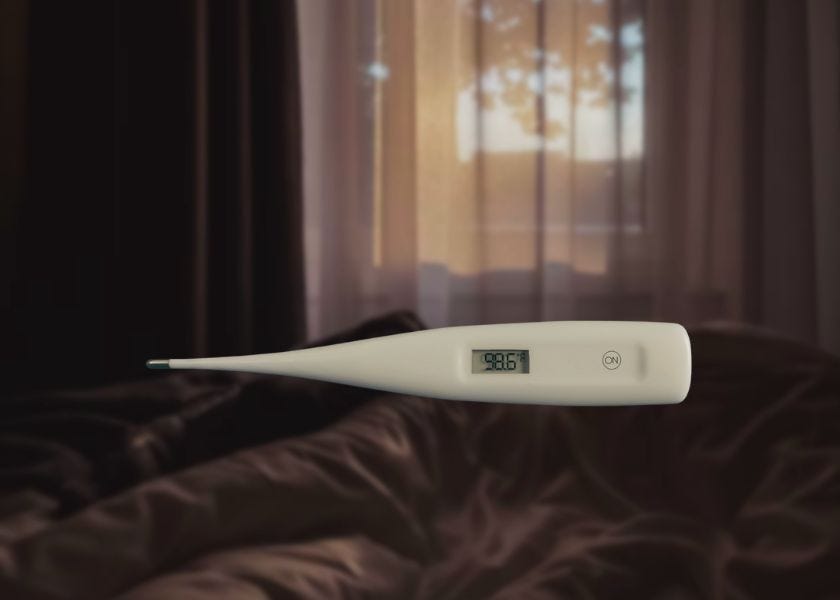
As you wake and gently call your soul back into your body, take your basal body temperature if you’re tracking fertility (don’t get up yet, stay in bed while you do this), or simply sense your internal climate. Ask:
Am I warm or cool today?
How do I feel today?
Take note of your temperature and moods or sensations in a journal or the Baba Yaga app (if you track with a thermometer that shows one decimal point in Fahrenheit or two decimal points in Celsius).
2. Body Check-In
Inspired by the somatic wisdom of Resmaa Menakem (My Grandmother’s Hands), Prentis Hemphill, and adrienne maree brown (Pleasure Activism).
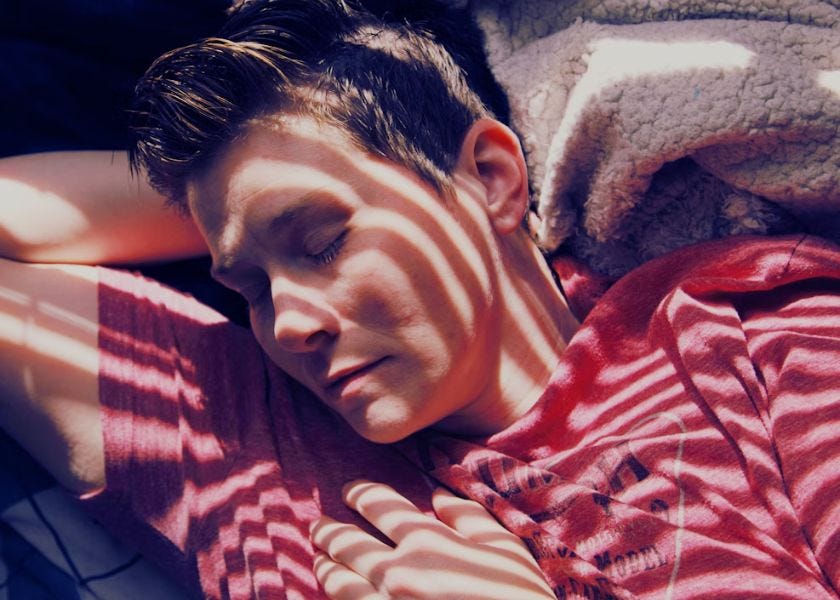
While still in bed, place one hand on your heart, one on your belly. Feel the meeting point between breath and flesh. Ask:
What sensations are present?
Where does my body feel open, where guarded?
If this feeling could speak, what would it say?
No fixing, just witnessing. This daily self-check-in is the foundation of trauma recovery. It teaches your nervous system that awareness is safety.
Pair it with a sip of something warm — nettle tea, ginger, or rose — to honor the endocrine system’s slow intelligence.
3. A Five-Minute Movement Invocation
From Staci K. Haines’ somatics and Clarissa Pinkola Estés’ embodied wild woman.

Put on one song that matches your current energy. Move. No choreography, no mirror, no audience. Let hips sway, shoulders roll, or feet stomp.
Ask: What shape does my energy want to take this morning?
Movement metabolizes stress hormones, which is especially essential for cyclical bodies whose cortisol rises differently across the month.
4. Breath of Belonging + Havening Touch
Inspired by Thich Nhat Hanh’s mindfulness, bell hooks’ All About Love, and trauma-informed self-soothing.

Breathe in and whisper: This body is mine.
Breathe out: And she belongs to Earth.
Then gently stroke your arms, shoulders, or face — a technique known as havening that increases oxytocin, the hormone of safety and connection (thank you, V on TikTok).
This practice re-regulates a nervous system conditioned to tense, freeze, or appease.
5. Mirror Ritual: Meeting the Gaze
Inspired by Audre Lorde’s Erotic As Power and Sonya Renee Taylor’s The Body Is Not an Apology.

Look at yourself softly. Say:
“I see you.”
“I’m listening.”
“You are enough in this body, right now.”
If you wish, trace the outline of a stretch mark, a scar, or the slope of your breast. Eros lives in presence, not perfection.
6. Dream Journal or Card of the Day
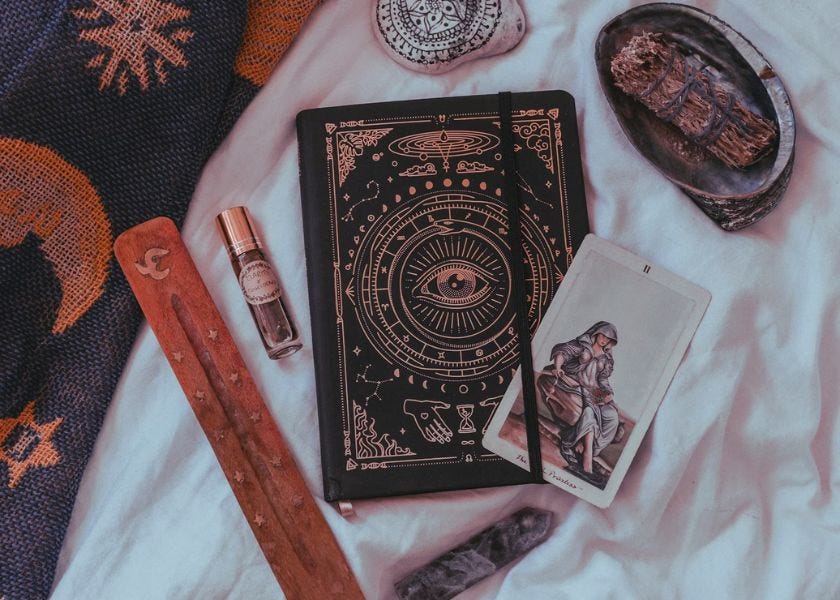
For those who travel far in sleep, jot down an image, word, or sensation. Ask what it wants to teach you.
Or, if you prefer, pull a tarot or oracle card of the day — not for prediction, but reflection. Ask: What energy accompanies me today?
Both are invitations to dialogue with your unconscious, the language of your own deep knowing.
7. Sunlight, Fresh Air, Touching Grass

Step outside if you can. Feel the air, let early light hit your eyes (without screens). Even a minute signals to your circadian rhythm that the world is safe and alive.
If you can’t go outside, open a window, breathe deeply, and imagine your roots sinking into the soil below.
8. The Three Questions
Perfect for ADHD minds, overthinkers, or those short on time.
Ask (or record yourself saying):
What do I want to do today?
If I could only get one thing done, what would it be?
How can Mama Gaia / source / godd / my most expansive self support me?
These questions can help shift us from performance into alignment, from doing into being.
9. Tiny Pleasure & Gratitude
Inspired by adrienne maree brown and Audre Lorde’s Politics of Pleasure.
Choose one sensory delight: the smell of your coffee, the texture of your softest clothes, the sound of your pet stretching.
Then whisper gratitude for one thing your body has done for you. Let it be ordinary. Ordinary is holy.
10. Closing the Circle
Before stepping into the noise, imagine roots descending from your feet into the earth.
Say softly: I walk with awareness today.
That’s enough.
Embodiment Is the Opposite of Optimization
When we learn to meet ourselves this way — not as problems to be fixed but as ecosystems to be tended — we start to rewrite everything capitalism and patriarchy told us about worthiness.
These small rituals are not about achievement. They are the daily art of coming home.
And if you want a companion on that journey, the Baba Yaga app is built to support you through it, one embodied morning at a time.
→ Download Baba Yaga Cycle Coach
Much love,
Natalie & the Baba Yaga
Cold exposure and sex differences: Castellani KC et al. J Appl Physiol. 2002; K. C. Castellani et al., “Gender Differences in Response to Short-Term Cold Exposure,” Eur J Appl Physiol. 2020; Stacey Sims, “Are Ice Baths Good for Women?” Woman & Home 2024.
Intermittent fasting in women: Moro T et al., “Effects of Eight Weeks of Time-Restricted Feeding (16:8) on Basal Metabolism and Reproductive Hormones in Women,” Nutrition & Metabolism 2016; Health Cleveland Clinic, “Intermittent Fasting for Women,” 2023.
Activating breathwork / fasted training stress effects: Laborde C et al., Front Psychol. 2022 (on autonomic activation and sex differences); Mountjoy M et al., “Relative Energy Deficiency in Sport (RED-S),” Br J Sports Med. 2018.
this is so beautiful, natalie! full of such steady wisdom & tenderness. i felt myself exhale reading it. i’m learning to listen more closely to my own rhythms & to let my body lead instead of pushing through. your words remind me it’s safe to soften & that there’s so much grace in moving slowly. i’m so grateful for your voice & the way you hold truth with such care.